Interview · Music
Interview with Miles Mosley
“Every child should study music.”
Like Kamasi Washington’s “The Epic”, Miles Mosley’s “Uprising” is an artistic statement by the Los Angeles musicians’ collective West Coast Get Down. A conversation about creativity, musical education and the burden of a first name with the 37-year-old Californian, who wants nothing less than to revolutionise the double bass for the 21st century.
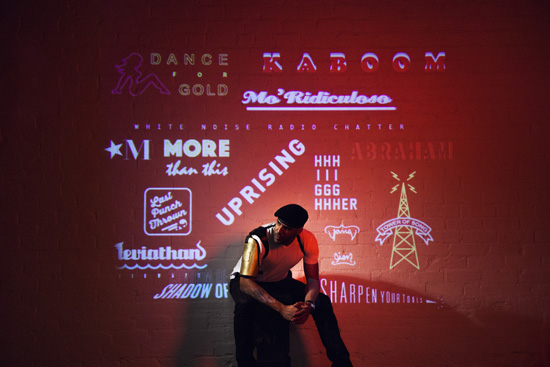
If the epithet “The hardest working man in show business” did not belong to James Brown alone, it could without doubt be applied to Miles Mosley. The 37-year-old bassist and singer-songwriter from Los Angeles, trained in classical music and jazz and always top of the class in his generation, already has a considerable record of achievements to his name. As a session musician he has played with greats such as the late Chris Cornell, with Lauryn Hill, Joni Mitchell, Jeff Beck and Christina Aguilera; in Hollywood he is known as the composer of film trailers as different as “The Muppets” and “The Dark Knight Rises”. This stylistic range also stands him in good stead in his main activity as a member of the collective West Coast Get Down. He has been connected with his kindred spirits – saxophonist Kamasi Washington, pianist Cameron Graves, keyboardist Brandon Coleman, trombonist Ryan Porter and drummers Ronald Bruner Jr. and Tony Austin – since their schooldays.
In December 2014 he booked a studio with them for 30 days. The result: 170 songs – the first of which caused a sensation the year before last as Kamasi Washington’s “The Epic”. From the same session now comes “Uprising” by Miles Mosley, who was impossible to miss on “The Epic” as well. His first album for Verve is a firework display that feeds on jazz but equally builds a monument to the funk and soul tradition. As if Jimi Hendrix were playing double bass in Prince’s band – that is how the American “Rolling Stone” described Mosley’s style. His undiminished admiration for Ray Brown, whose solos he once transcribed in full as a student so that he could study them, has ensured – despite a stylistic bridge-building that reaches far into electronic music and hip-hop – that he has remained faithful to his acoustic instrument. He wants to rescue this magnificent instrument into the 21st century, he says, and has built a mighty pedalboard specifically for the purpose, with which he coaxes the most incredible sounds from the double bass.
The following conversation took place in Brooklyn in May 2017, during Mosley’s US tour:
Miles Mosley, you are part of the collective West Coast Get Down. Tell us about it.
Miles Mosley: It’s a long story that has already been going on for over 25 years. We met during our musical education. We were lucky, because our generation benefited from the policies under President Bill Clinton at the time. He funded education programmes that had grown out of private initiatives but were then offered in public schools. That way instruments were paid for for children, and the schools were able to hire first-rate teachers. That was the time we came together. Because each of us was the best in his field, we were asked to play concerts. That’s how it started. Although we went our own ways during college and were also booked individually as musicians, we always came back together to play whenever we returned to LA.
Were there opportunities for you to perform at short notice?
For a long time that was difficult, because we didn’t have a musical “home”. But then we found this place in Hollywood with the simple name “Piano Bar”. We played there two nights a week according to the following rules: the owners were not allowed to tell us when and what to play. And they weren’t allowed to charge admission. A pretty good deal (laughs). This residency became a creative and artistic success for us. Every week we could try out new things, and so we slowly built up our own catalogue of compositions. Once, on an ordinary Wednesday night, we had over 500 people in the club , whereupon the fire brigade stepped in because of overcapacity. But since the fire marshal liked our music, he let us finish the set (laughs).
And then came the 30-day studio session.
Exactly. By the end of those concerts we had so much material that we holed up in the studio for a month and recorded 170 tracks. The first album from that session was Kamasi Washington’s “The Epic”, now followed by my album “Uprising”.
Although you can be heard on “The Epic”, “Uprising” sounds completely different. How should one imagine the dynamics within the group?
Each of us has very distinctive, individual skills on his instrument, and each of us is also interested in different musical styles. That’s why the results sound so different, even though at heart we are all clearly and passionately at home in jazz. With me it’s funk and hip-hop; Cameron Graves, on the other hand, is into prog rock and metal. These completely different perspectives flow into our shared sound. I think that once all of us have released our solo albums in the near future, people will see from the whole how we influenced one another.
Just to make this clear: all 170 songs that were recorded will be released.
Certainly in the world I would like to live in (laughs). Each of us has numerous individual projects going on, and since we are a collective and not a band, we don’t owe each other any explanations. Each of us is trying to create his own space. I feel honoured that I can now release my music on Verve Records, because there is a great legacy behind that label. It feels like home to me. I dream that one day, when we are old and grey, the whole session will be released as a box set, because in its entirety it documents how young people can inspire one another and how something great can come out of that.
We are talking here in Brooklyn. The music of the East Coast differs quite strikingly from that of the West Coast, which moves somewhere between sunshine and melancholy – something best heard in the music of Brian Wilson, but also, in other variants, on “The Epic” or “Uprising”. I’ll simply assume that your music would sound different if you had grown up in Brooklyn.
Absolutely. For a start, I would never have hooked a double bass up to a pedalboard, because I’d never have got onto the subway with it. In L.A. you own a car, and you just throw all your gear in (laughs). Even the different urban structure influences the music. L.A. is a big city, but one that sprawls. You can play clubs there very well, work on your sound and experiment without immediately being in the spotlight. In New York you can’t hide, unless you stay in your apartment, where you can’t rehearse with a 13-piece orchestra, though (laughs). The fact that New York, as the mecca of jazz, is permanently the centre of attention has given us advantages. We were able to use the shadow to create something new, on which the spotlight is now falling too. Maybe now it’s our turn, the children of the 1990s. The race riots of that time are as much a part of our identity as the Beach Boys and Hollywood. And our mentality allows us to present the mix in a way that makes it seem larger than life.
Many of the musical crossovers came from New York: Lou Reed played with John Zorn, Sonic Youth with Public Enemy – now this sonic melting pot seems to be growing on the West Coast, where the jazz community, hip-hop and electronic music get along famously. Your collective often plays with people like Kendrick Lamar or John Coltrane’s nephew, Flying Lotus.
I can’t stress enough that we owe this to the school system of that time. The public schools are still grey, outdated and problematic in many ways, but there were people who were committed to young people, who did everything they could to make sure we didn’t join a gang. Because in L.A. the studio scene is more important than the live scene, you can’t afford blinkers. Anyone who wants to make a living from music can’t just play jazz or classical. As a session musician you have to be able to cover every possible style of music. If you’re booked for a country album, you have to know your way thoroughly around the bass lines, the sound, the accents and the history of country music. It’s easier for us to combine the most diverse elements, because the studio scene forces us to keep an open mind.
On the cover of “Uprising” you are seen wearing a black beret reminiscent of the Black Panthers. Are you a revolutionary?
I see my main task as revolutionising the way a double bass can be used. I wanted to develop an instrument that hasn’t changed in the last 500 years in such a way that it is capable of sounding like the sound I hear in my head. The history of music has produced incredible bassists. I studied them and they will always be my heroes, because they moved the instrument forward by playing it differently from their predecessors. But since the double bass is an acoustic instrument, it risks being drowned out in today’s live settings. Of course, there is the electric bass, from which people like Bootsy Collins or Les Claypool were able to coax so many incredible sounds. But I love my double bass more than anything, and I want it to find its place in the 21st century too. I do this by demonstrating everything that can be done with it. That is my very own revolution. As a singer-songwriter, though, I don’t play just for myself but for people, and I want a connection to arise between my music and the listener. I firmly believe that this should be the purpose of music: to give people something they can build a relationship with. Music should be an emotional anchor you can fall back on.
And yet: in the song “Abraham” you sing “mediocrity is everywhere”. In the age of Donald Trump, that is surely a comment.
In the end, music is always viewed in light of the political environment in which it was created. Our collective came together without any commercial ulterior motive; solely and exclusively to make music for people. In our business-driven world, that alone could be understood as a political statement. The inclusion of the most diverse styles can safely be seen as a sign of unity and tolerance, too. But I have to admit that over the last eight years I didn’t concern myself with politics in detail. Why not? Because my team won in 2008 and came to power. Only now am I looking at things in more detail and more critically again, and that inevitably leads to statements that are to be understood socially and politically.
You are named after Miles Davis.
Yes, and that’s because Miles is my mother’s absolute favourite musician. The first jazz piece I learned on my double bass was “All Blues”. At the time I was studying classical music, and as a teenager I was into rock music, but I wanted to make my mother happy and at the same time show her that I was making progress and that the money she was spending on me wasn’t wasted (laughs). I don’t think any musician can claim not to have been influenced by Miles. And I don’t just mean the music, but also his attitude and his talent for branding. Luckily I didn’t choose the trumpet, otherwise I’d probably be done for today (laughs). But as a jazz musician whose first name is Miles, you somehow also feel obliged never to stand still and always to look for new frontiers.
Do you still have a relationship with classical music today?
Oh yes. I love string quartets more than anything! There are passages on my album that I arranged for strings. As a student, whenever a classical piece had a few bars that fascinated me, I always felt the urge to linger there or to play the part as a loop and then lay a solo over it. My admiration always ended in the desire to manipulate. In private I still play classical pieces again and again. No other music tells you more honestly what technical level you are at.
You are a clear advocate of musical education.
Absolutely. Every child between the ages of three and ten should study music. Even if it doesn’t lead to a career in the end, it is absolutely essential for the development of the brain. It leads to more tolerance, not only towards musicians, but it also changes the way you look at the world. Musically trained people want to hear more than just songs that sound like the simplest nursery rhymes. If you stop at that level, then as an adult you also choose those simple patterns when choosing music. The quality of popular music tells us how well the people in a country have been educated musically. In Brazil, people sing en masse along to songs with incredibly complex melodies as if it were the easiest thing in the world. That says a lot about their culture.
And how do we bring social and political culture back into our society?
The fact is that we live in a short-term world, and education is something that can only be achieved in the longer term. People want quick answers to their pressing problems. That’s why I tend towards projects that are based geographically on a small area. Projects that operate within a radius of five miles. That way you achieve faster results for the people of that neighbourhood, and at the same time things that take longer can be communicated better. The smaller projects then overlap geographically and begin to communicate with one another and spread in that way. Much in the sixties and seventies was done in exactly that way. People supported one another, looked out for one another and also had more tolerance. And that is what we should return to.
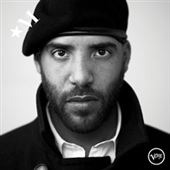
Album: Miles Mosley: “Uprising” (Verve / Universal)
Video: “Abraham”, 31.5.2017 live at Paste Studios, New York »
Video: “Young Lion” – Live at Santa Monica Twilight Series »