Interview
“Prisoners” – Interview with Melissa Leo
“I Don’t Need Praise”
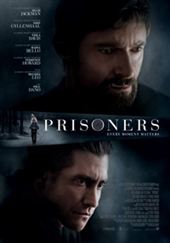
Melissa Leo was present twice over at the 2013 Zurich Film Festival: as a member of the jury and on the screen in “Prisoners” alongside Hugh Jackman. A conversation with the Oscar winner about good and bad directors, the art of acting and the difficulty of having to judge other people’s films.
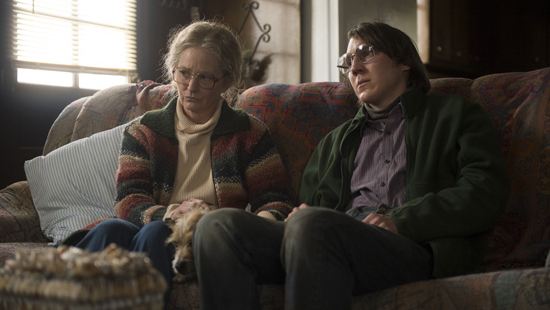
In recent years you have attracted attention for portraying strong, self-confident female characters – in “Frozen River”, as Toni Bernette in the HBO series “Treme”, or in “The Fighter”, for which your performance was honoured with an Oscar. Do you consciously seek out this kind of role?
No, not really. I always assume that I’m capable of playing any kind of character I’m offered. I’ve just won an “Emmy” for a guest role in Louis C.K.’s comedy series “Louie”. And that award makes me so happy and proud, because previously hardly anyone could have imagined me in comedy. In fact, I don’t choose the roles; the roles choose me. But it’s enormously important to me that the characters I play are grounded, that they have something to do with reality in some way. I have to be able to understand their motivation, regardless of whether I agree with them or not. In the case of Toni Bernette in “Treme”: I’ve played her for so long now that I feel very close to her. She has become a friend.
Are there also moments, when you watch the finished film, when you discover things in your performance that you weren’t aware of? As if the role had taken on a life of its own for a moment?
I know exactly what you mean. But no. As a trained actress, I don’t play a character from the gut. There’s a process of development behind it. Of course you discover something new about your role on every shooting day, but that too is part of a conscious process.
That’s true. And it takes a certain amount of time to find your footing in a role like that. You go about it very pragmatically: first there’s the script, and in it you find the coordinates of your character. And then the design and costume departments come in, who have of course also given thought to the character. What does she wear? How does she live? All these things are enormously important. In the case of “Prisoners”, I also had intensive conversations with director Denis Villeneuve, which is rather unusual. Normally you get the role and develop most of it on your own. Here it was different, and I really appreciated that. All the insights you gather in this way then add up to the key that gives you access to the character.
You mention your special collaboration with Denis Villeneuve, a relatively young Canadian director with whom you had never worked before.
When I was offered the role, I was anything but sure. But it was suggested that I should at least meet Denis before deciding. I thought to myself: go along – getting to know a new director has never done any harm (laughs). When we then met for lunch in New York, I knew within five minutes that I absolutely wanted to work with him. His sensitivity towards actors is incredible. He knew that in the case of “Prisoners”, human abysses would be waiting for us actors, and he promised me that he would never leave my side along the way. Now, I had often heard promises like that before, but unlike others, Denis didn’t break them. He is a “director” in the truest sense of the word. How often have I had to hear the following sentence: “You know what you have to play, so just do it.” For actors, freedoms like that are nothing more than nebulous terrain on which they are left alone. Actors want to be told what to do. I don’t crave praise at all, but I demand answers instead of “just do it”.
You are promoting “Prisoners” here in Zurich. So you can hardly do anything other than praise the work.
Yes, I know that all this sounds like advertising and that you hear more than enough such paeans when new films are being promoted. As a serious actress, I can only stress once again that in my entire career there have been only a few directors with whom it was possible to work as intensively and constructively as with Denis. I had a similar experience with the film “21 Grams” and director Alejandro González Iñárritu. His unique view of the USA as a Mexican reminds me of Denis’s, who as a Canadian also looks at us from the outside. And that distance is extremely enriching for us actors.
How important to your career is the fact that you grew up on the Lower East Side of Manhattan?
(laughs) I think it helped me to persevere on my path. I loved and valued growing up in the heart of New York. In the 1960s in particular there was so much going on, and my family was friends with incredibly interesting people. That time was certainly decisive and influenced me greatly. And deep down I really am a city girl, even though my mother later moved with me to Vermont. So part of me is a country girl too (laughs). And both sides have been extremely helpful in my work.
You have now spent ten days as a member of the jury at this year’s Zurich Film Festival. How unusual is it, as an actress, to watch other people’s films?
Being a jury member is difficult for me if only because I know how much work goes into all these productions. I don’t judge films according to my personal taste, but according to a film’s visible qualities. Can you recognise the director’s intention? And how strongly and how skilfully did he manage to realise it? I try to keep myself out of the assessment, because it’s a terrible feeling to have to pass judgement on others.
Did you watch the films in the cinema?
The festival management insisted that we watch the entries at public screenings, and I appreciated and enjoyed that here in Zurich. It makes a huge difference whether you get to experience a film with an audience or have to watch it alone on DVD in a hotel room.
The interview with Melissa Leo took place during the 9th Zurich Film Festival.
Zurich Film Festival: more articles »